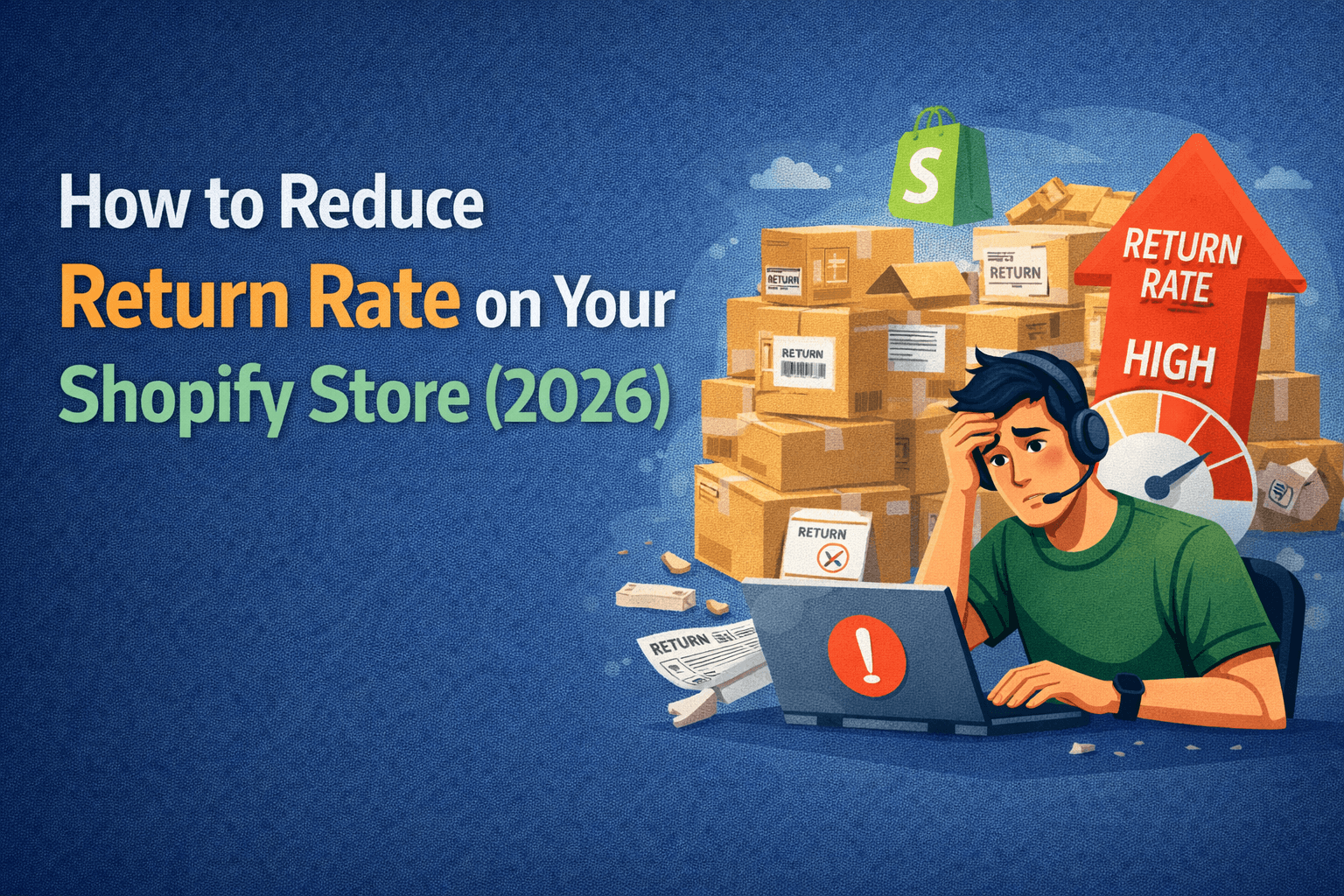
Every Pakistani Shopify store owner knows this pain. You fulfilled 150 orders this week. Forty of them came back. The courier charged you twice — once for delivery, once for return. Your inventory is blocked, your cash is tied up, and you're starting the week at a loss before you've even opened your laptop. That's RTO — Return to Origin — and it is the single biggest profit killer for COD-based Shopify stores in Pakistan. This guide breaks down exactly why it happens, what you can and can't control, and how to fix it systematically.
What Is RTO and Why Does It Hit Pakistani Stores So Hard
RTO happens when a courier fails to deliver a parcel and sends it back to the seller. Every RTO costs you double shipping — forward and reverse — plus blocked inventory, repackaging time, and a lost sale. Online stores lose approximately one in three orders to RTOs, particularly when Cash on Delivery is involved. Qikink For Pakistani stores this compounds fast because almost 70–80% of online shoppers in Pakistan prefer COD EComposer, meaning the vast majority of your orders carry RTO risk by default. RTO rates typically range from 20–30% for most ecommerce stores, while COD orders specifically can result in an alarming 40% RTO rate. Shipyaari If you're running a Pakistani Shopify store on COD and doing nothing to actively reduce RTO, you're likely losing 3–4 orders out of every 10 you ship. That's not a logistics problem — it's a revenue leak that compounds every single week.
The Real Reasons RTO Happens
Before jumping to fixes, you need to understand which type of RTO you're actually dealing with. They have different root causes and different solutions.
- Customer unavailability at delivery The most common cause in Pakistan. The rider arrives at 2pm, the customer is at work, no one answers, and after two or three failed attempts the parcel gets marked RTO. This happens not because the customer didn't want the order — they just didn't know it was coming that day. Brands can send reminders through WhatsApp or SMS about upcoming deliveries. Such proactive communication reduces delivery failures, directly helping reduce RTO. PayU An "out for delivery today" WhatsApp message sent at 9am changes everything — the customer plans to be home.
- No post-purchase communication Most Pakistani Shopify stores go completely silent after the order confirmation. The customer hears nothing for 3 days, assumes something went wrong, and either cancels or refuses the parcel when the rider finally arrives. Brands that implement WhatsApp COD confirmation within 5 minutes of order placement see RTO rates drop from 30–35% to 18–22% within the first month. Dondy
- Incomplete or wrong address Wrong house number, missing street name, incorrect city — any of these can cause a failed delivery that becomes an RTO. The fix is simple but often skipped: confirm the address at checkout and again at dispatch via WhatsApp before the parcel even leaves the warehouse.
- Low purchase intent on COD orders When a customer places a COD order, they haven't committed any money yet. There's no credit card charge, no payment processed, nothing at stake. Dondy Some customers place orders impulsively — late at night, during a sale — and by the time the parcel arrives 3 days later, they've changed their mind or forgotten entirely. These are the hardest RTOs to prevent, but order confirmation via WhatsApp within minutes of purchase filters most of them out.
- Fake and fraudulent orders Some orders are placed with no intention of accepting delivery — wrong numbers, fake addresses, or serial refusers. Roughly 8–10% of COD orders are outright fraudulent. Dondy Identifying and blocking these before dispatch saves you the full shipping cost both ways.
What Each RTO Actually Costs You
Most store owners think of RTO as "I lost one sale." The real cost is much higher. For every returned order you pay forward shipping to the customer's city, reverse shipping back to your location, any repackaging needed, courier handling charges on both legs, and your own time managing the return. Research suggests that on average you can lose 30% or more of your profit during RTOs, and shipment failure on COD orders can bring in negative cash flow — when more money leaves your business than stays in. ClickPost On a store doing 500 orders a month at a 30% RTO rate, that's 150 returned parcels. At even Rs. 300 wasted per return in double shipping alone, you're losing Rs. 45,000 a month — before accounting for blocked inventory and lost sales.
6 Proven Fixes to Reduce Your Return Rate
Fix 1 — Send an "Out for Delivery" WhatsApp message every single time This one fix alone has the biggest impact on RTO. The moment your courier marks a parcel "Out for Delivery", an automated WhatsApp message should fire to your customer: "Assalam o Alaikum! Your order from [Store Name] is out for delivery today. Our rider will arrive shortly — please keep your phone nearby. Order: [item name] | Amount: Rs. [COD amount]" The customer knows exactly what's coming, how much cash to keep ready, and to stay available. Missed delivery attempts drop dramatically. The Track My Order Shopify app does this automatically — the moment TCS, Leopards, PostEx, or M&P marks your parcel out for delivery, your customer gets notified on WhatsApp without you lifting a finger. Fix 2 — Confirm every COD order within 5 minutes of placement Speed is critical — confirming within 5 minutes catches customers while their buying intent is still at its peak. Dondy Send a WhatsApp message immediately after order placement asking the customer to confirm their order and verify their address. Unresponsive customers are a red flag — hold their order before dispatching. This single step filters out impulsive orders, wrong numbers, and fake orders before you've spent a rupee on shipping. Fix 3 — Send tracking updates at every status change Customers who receive regular updates — picked up, in transit, out for delivery, delivered — almost never refuse their parcel. They're engaged, they're expecting it, and they've mentally committed to the purchase by the time it arrives. Stores that go silent after dispatch see much higher refusal rates simply because the customer has forgotten the order or lost trust. Automate these updates through the Track My Order Shopify app and you'll notice the difference within the first week. You can read more about how automated tracking updates work in our guide on stopping "Where Is My Order" messages on your Shopify store. Fix 4 — Verify the delivery address before dispatch Before you hand any parcel to the courier, send a quick WhatsApp confirmation: "Please confirm your delivery address: [address from order]. Reply YES to confirm or send your correct address." This takes 30 seconds per order and eliminates every RTO caused by a wrong or incomplete address. For high-value COD orders this step is non-negotiable. Fix 5 — Flag and handle repeat refusers With the help of technology and software, sellers have options to track the RTO frequency of individual buyers. If a person has a high rate of RTO requests, a seller could ban or restrict them from placing certain orders. Meesho Keep a simple log in a Google Sheet or your Shopify customer notes. If a customer has refused delivery twice, either call them before dispatching their next order or disable COD for their account. A small number of repeat refusers cause a disproportionate share of your RTO losses. Fix 6 — Incentivise prepaid orders Since prepaid orders generally show much lower RTO rates compared to COD — 4–8% vs 20–30% for COD — incentivising prepaid can create a meaningful shift. Shadowfax Offer a small discount, free shipping, or a gift for prepaid orders. Even converting 20% of your COD volume to prepaid cuts your overall RTO exposure significantly. You don't need to remove COD — just make prepaid more attractive.
What You Cannot Fix With Technology Alone
Some RTO causes are genuinely outside your control — courier errors, rider mismarking a delivery as "Attempted" when they never actually tried, or legitimate customer dissatisfaction with the product. For these, the fix is operational: choosing reliable couriers, maintaining accurate product listings, and having a clear return policy. But the majority of Pakistani Shopify store RTOs — customer unavailability, no confirmation, wrong address, impulsive orders — are entirely preventable with better post-purchase communication. That's the lever most stores aren't pulling.
The Track My Order Shopify App — Built for This Problem
The Track My Order Shopify app was built specifically for Pakistani merchants facing exactly these issues. It connects your Shopify store directly to TCS, Leopards, PostEx, M&P, and other major Pakistani couriers, then fires automated WhatsApp updates to your customers at every status change — picked up, in transit, out for delivery, delivered. No manual work. No missed updates. No "order kab aye ga?" messages flooding your WhatsApp. And most importantly, fewer customers refusing parcels because they weren't expecting the rider. A free plan is available — you can set it up and see the difference on your very next batch of orders.
Frequently Asked Questions
Start Reducing RTO Today
The difference between a 35% RTO rate and a 15% RTO rate on a 500-order-per-month store is roughly Rs. 60,000–80,000 saved every month in wasted shipping alone. The fix isn't complicated — it's consistent, automated post-purchase communication that keeps your customers informed and ready to receive. Install the Track My Order Shopify app, connect your couriers, and start sending automated WhatsApp updates from today. Free plan available.